



2026 MWC Shanghai Observation: 6G Moves from 'What to Do' to 'How to Do,' Satellites Enter Phase of Large-Scale Networking for Cost Reduction
Blue Whale News, June 27 (Reporter Zhai Zhichao) Recently, MWC Shanghai 2026 opened as scheduled. Unlike last year's lively atmosphere of intensive 5G-A commercial contract signings, this year's exhibition halls emphasized a more cautious pragmatism. The '6G Industry Ecosystem Zone' and 'Future Constellation' satellite exhibition area, set up independently for the first time, were popular, but the industry was more keen on discussing when technology would turn into real money.
Blue Whale Tech reporters found that in the 6G direction, the three major paths—integrated sensing and communication, AI-native, and space-air-ground integration—are no longer controversial. Chip vendors have even started pre-research stocking. In the satellite internet field, the 'land grab' for orbital frequencies is basically over, and large-scale networking and cost reduction have become new themes. However, consensus stops at the technology level: terminal manufacturers and investment institutions are generally waiting. End terminals are waiting for killer applications, while investment institutions can't calculate return cycles. Even international satellite players that have achieved profitability struggle in the early cultivation of the civilian market.
When the financial account of 5G investment is not yet fully closed, 6G and satellite internet are collectively entering a transition period where 'vision is clear but delivery is difficult.' Technology paths are narrowing, but commercial outlets are widening. Under real investment return constraints, the industry needs a more practical answer than 'grand narratives.'
6G Technology Paths Converge, Commercial Closed Loop Still Being Explored
Entering the 6G Industry Ecosystem Zone in Hall N3 of MWC Shanghai, five major sections—Beijing 6G Lab General Zone, Communication Enhancement, Integrated Sensing and Communication, Integrated Computing and Intelligence, and Space-Earth Integration—dissect 6G's core technology vision more clearly and tangibly. On-site staff explained that this is the first time MWC Shanghai has set up a separate hall for 6G, sending a clear industry signal: 6G has moved from conceptual discussion to the key stage of system verification.
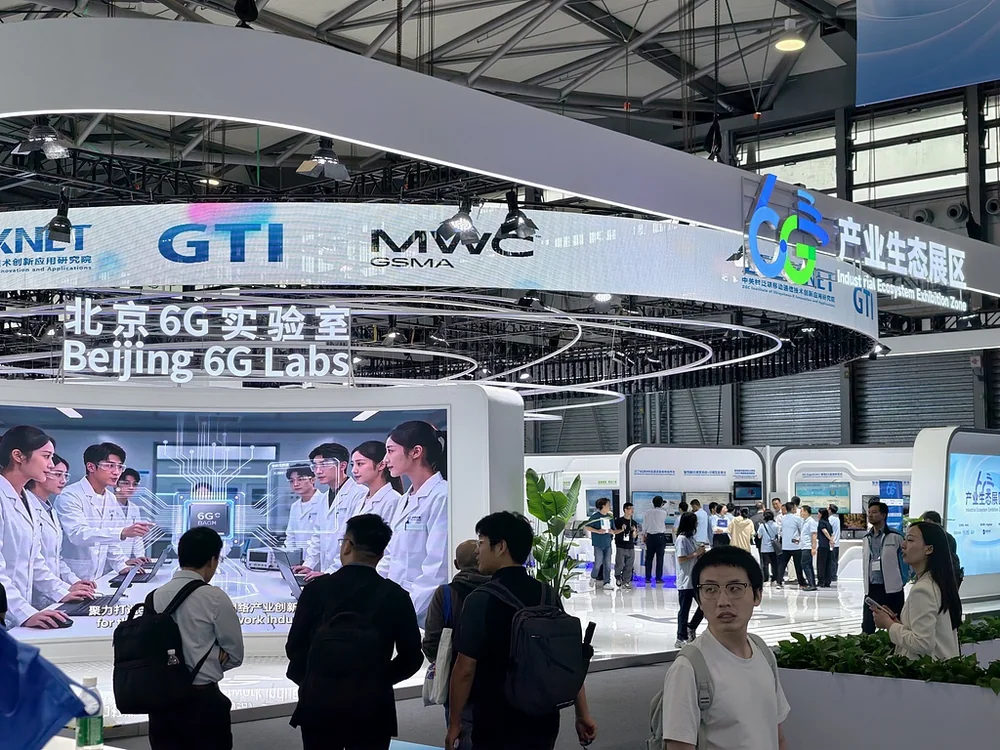
'If last year everyone was still debating what 6G should do, this year the debate is already about how to do it and what trade-offs to make,' a technician from the Beijing 6G Lab General Zone told reporters. Currently, the three enhancement paths—integrated sensing and communication, AI-native, and space-air-ground integration—have largely formed industry consensus, and key technologies such as terahertz communication and intelligent metasurfaces have entered prototype verification.
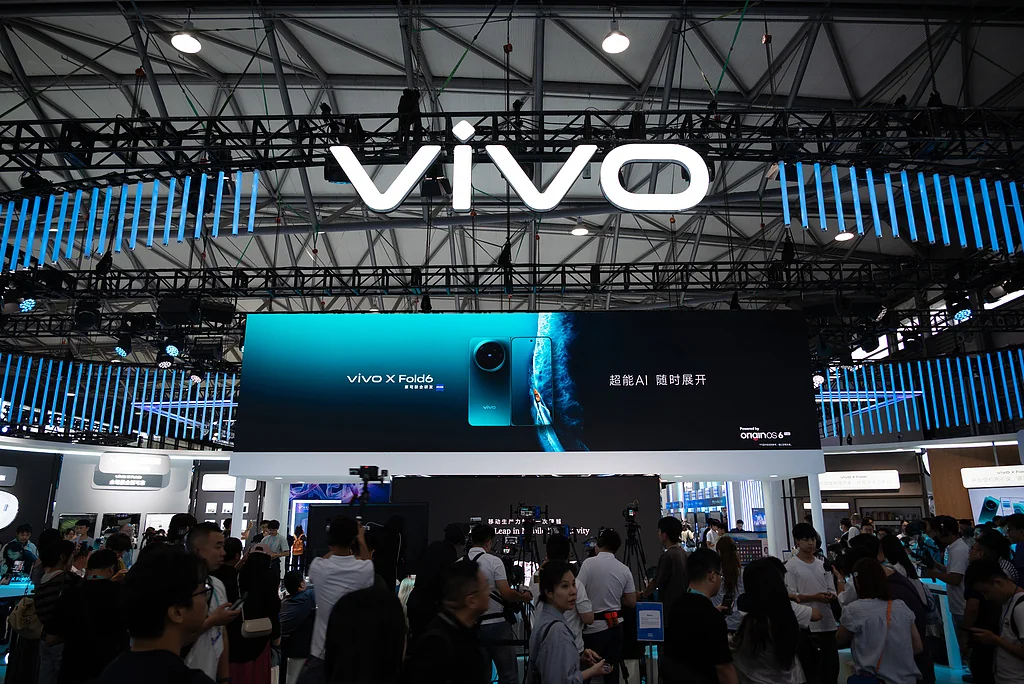
The pace of upstream layout is clearly accelerating. At this exhibition, Qualcomm demonstrated an end-to-end 6G prototype system, Galaxy Aerospace publicly showcased its self-developed second-generation direct-to-phone phased array antenna for the first time in the 6G Industry Ecosystem Zone, and vivo exhibited its 6G pre-research prototype and technology roadmap. Unlike Xiaomi's focus on underlying transmission algorithms and OPPO's emphasis on communication paradigm innovation, vivo's demonstration is more oriented toward end-to-end systems and application deployment: its complete 6G test system includes MR terminals, 6G terminal prototypes (UE), 6G base stations (RAN), and core networks across the entire link.
An on-site representative from a domestic chip manufacturer said the company's internal 6G pre-research team size has doubled compared to last year, with clear logic: 'If we wait until the standard is frozen, it's too late; we must reserve technical capabilities in advance.'
However, the enthusiasm of upstream players contrasts with the caution of terminal manufacturers. Blue Whale Tech reporters asked multiple mobile phone brands in the 6G zone about their 6G terminal plans, and most responses were 'closely monitoring,' with few consumer-grade product demonstrations specific to 6G at the booths. A 6G pre-research director from a top-five global smartphone maker said in informal discussions that it is currently difficult to provide a clear commercial roadmap for 6G phones. The core reason is not a lack of technical capability, but the terminal side's ongoing assessment of user needs and application scenario conversion paths. In his view, the experiential dividends of 5G have not yet been fully realized, and the immersive holographic and multi-sensory scenarios envisioned by 6G still have a distance from the mass consumer market.
Investment circles are also cautious. A TMT-focused early-stage investor who visited the 6G zone during a break said the technology evolution direction is impressive, but from an investment perspective, the capital returns of 5G are still being digested, and the scale of subsequent 6G R&D and network deployment investment is huge, with exit cycles and return expectations currently lacking sufficient data support. He admitted that at this stage, it is more about keeping track and observing; the timing to invest still needs clearer commercial signals.
'Future Constellation' Takes Preliminary Shape, Profit Path Awaits Verification
Unlike the 6G zone's focus on key technology verification, the 'Future Constellation' satellite industry exhibition area, set up for the first time, presents a different industry rhythm: the orbital landscape has preliminarily taken shape, and participants have entered a phase of resource and cost refinement.
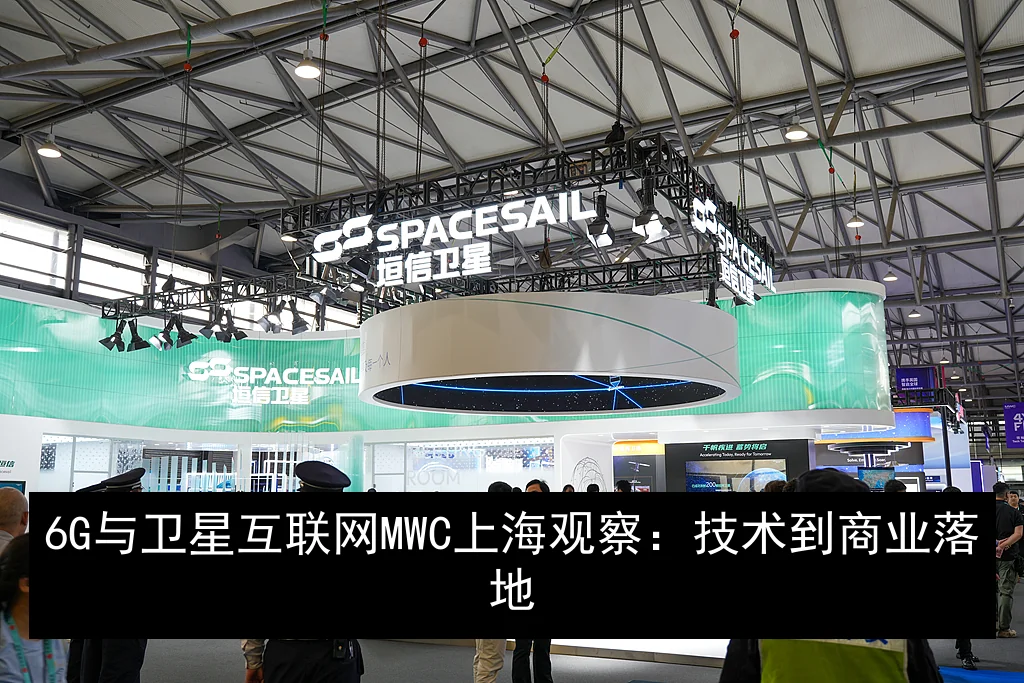
Domestic LEO broadband and narrowband constellation operators such as Spacetime DaoYu, Guodian Gaoke, and Yuanxin Satellite joined international players like Iridium Communications in setting up booths. Spacetime DaoYu displayed real terminal equipment for LEO satellite internet in scenarios like ocean-going ships and desert mining areas; Guodian Gaoke focused on promoting Tianqi Constellation's case studies in the IoT field; Yuanxin Satellite engineers conducted a live video call test using the 'Qianfan Constellation.'
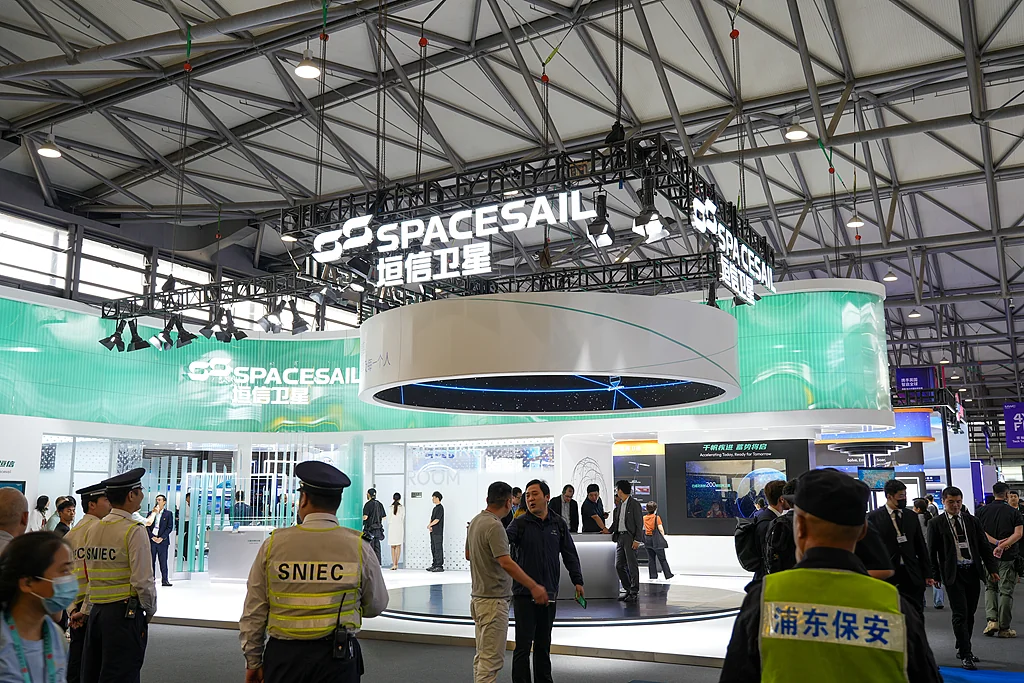
'The race for satellite internet orbital and spectrum resources has come to an end; the current key lies in large-scale deployment and cost control,' said an on-site representative from Guodian Gaoke. He revealed that the batch production cost of the company's narrowband communication payloads is continuously decreasing, but the user scale of satellite internet services has not yet reached the break-even point; at least in the next few years, government and industry orders will remain the basic support for revenue.
In the process of forming profit models, terminal costs are a noteworthy factor. When discussing satellite communication terminal material costs at antenna and module manufacturer booths, interviewees generally said costs are rapidly declining and have the capability to be integrated into mainstream phone designs, but specific figures were mostly not disclosed.
A business manager at the Iridium booth said that Iridium has achieved positive cash flow through narrowband voice and low-speed data services, but the traditional market space is nearing saturation, and next-step growth needs to expand into IoT and emergency communication fields. Meanwhile, domestic LEO broadband constellations are still in a catch-up phase prioritizing scale, and achieving break-even will require time and user accumulation.
