


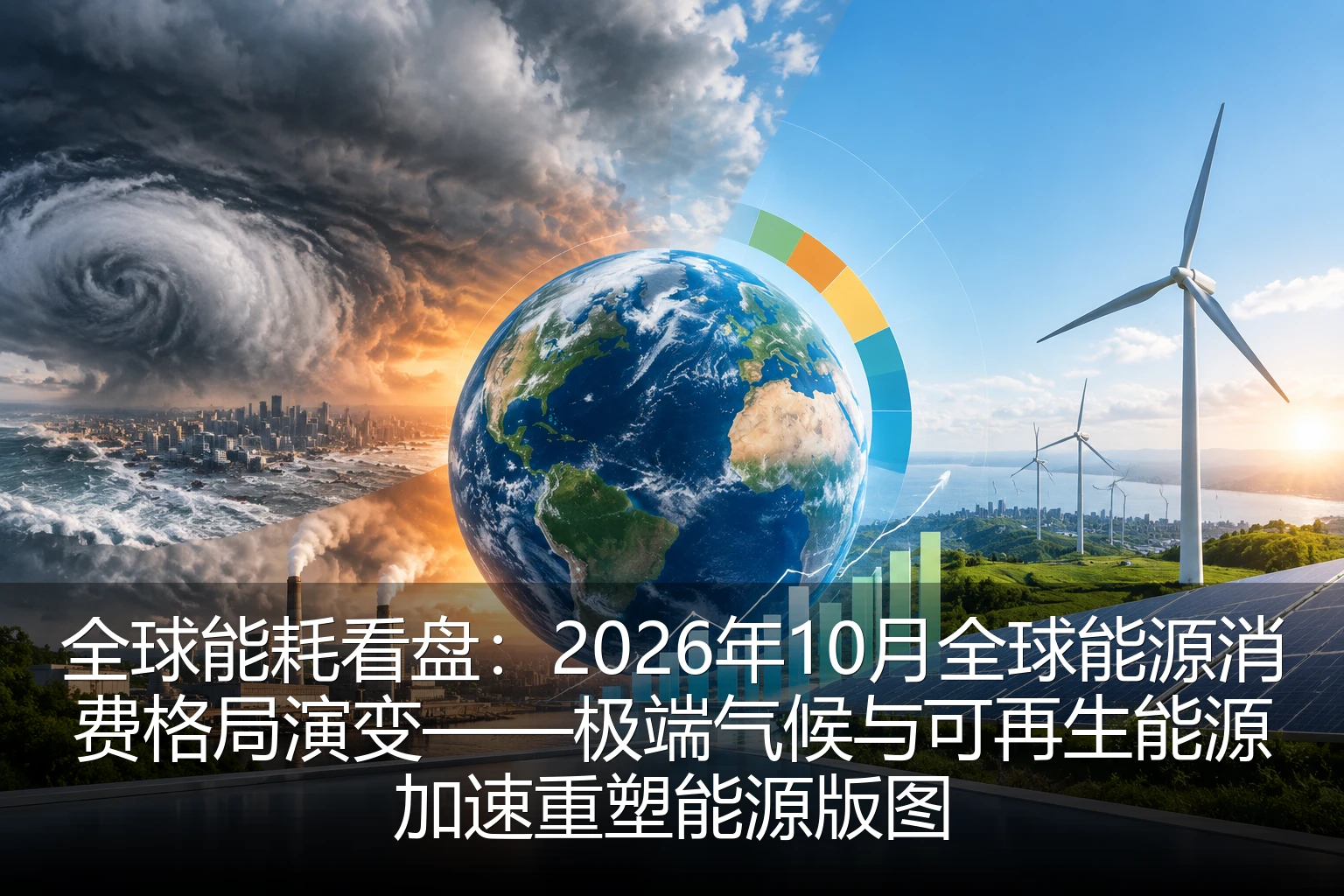
Global Energy Consumption Outlook: Changes in Global Energy Consumption Patterns in October 2026—Extreme Climate and Renewable Energy Accelerate the Reshaping of the Energy Landscape
Global energy consumption data for the third quarter of 2026 is now available. Combined with the dual impact of frequent extreme weather events and breakthroughs in renewable energy technologies, the global energy consumption pattern is undergoing a profound transformation. According to the latest report from the International Energy Agency, the "2026 Global Energy Market Outlook," global energy consumption growth slowed to 1.8% compared to the same period last year, but structural changes are significant, with the share of renewable energy exceeding 30% for the first time, becoming a key driver for energy transition.
Frequent Extreme Climate Events Reshape Global Energy Demand Curves
During the summer of 2026, the Northern Hemisphere experienced unprecedented extreme high temperatures, with temperatures in several European countries breaking historical records, and Asian regions also suffering from persistent heatwaves. These extreme climate phenomena have a profound impact on global energy demand, primarily manifested in changes in electricity consumption structure.
Data from the International Energy Agency shows that electricity consumption for air conditioning and cooling from July to September 2026 increased by 12.3% year-on-year, reaching a new historical high. Meanwhile, due to high temperatures leading to a decrease in hydropower generation, some countries have had to increase natural gas and coal power generation to cope with power shortages. This contradiction between "summer electricity peaks" and "insufficient renewable energy output" is becoming the new normal for global energy consumption.
It is noteworthy that the frequent occurrence of extreme weather events is also accelerating the upgrading and modernization of energy infrastructure in various countries. According to the Global Energy Infrastructure Alliance statistics, global energy infrastructure investment increased by 18.5% year-on-year in 2026, with investments in grid modernization and distributed energy systems accounting for over 60%, demonstrating a high emphasis on energy system resilience by various nations.
Renewable Energy Accelerates Replacement of Traditional Energy
Against the backdrop of energy transition, renewable energy is replacing traditional energy at an accelerated rate beyond expectations. In the first three quarters of 2026, the total installed capacity of new renewable energy reached 380 GW, a year-on-year increase of 25%, with solar photovoltaic new installations accounting for over 60%, becoming the fastest-growing form of renewable energy.
Reports from the International Renewable Energy Agency show that the proportion of renewable energy generation in total electricity generation reached 36% in 2026, surpassing fossil fuel generation for the first time. Especially in Europe and North America, renewable energy has become the mainstay of electricity supply, with renewable energy generation share in Germany, Spain, and other countries exceeding 50%.
Breakthrough progress in energy storage technology is a key factor in the accelerated adoption of renewable energy. In 2026, global energy storage capacity increased by 70% year-on-year, and battery costs decreased by about 60% compared to 2020, significantly improving the stability and reliability of renewable energy. Meanwhile, hydrogen energy technology is also rapidly maturing, with green hydrogen production costs decreasing by about 50% compared to 2020, providing a new path for industrial decarbonization.
Clear Differentiation in Regional Energy Consumption Patterns
From a regional perspective, the global energy consumption pattern shows a clear trend of differentiation. The Asia-Pacific region continues to be the main driver of energy consumption growth, with China, India, and Southeast Asian countries contributing 65% of the increase in global energy consumption. Among these, India's energy consumption growth rate reached 6.2%, surpassing the EU to become the third-largest energy consuming entity globally.
Energy consumption in North America and Europe is stabilizing, but with significant structural changes. Renewable energy share in US energy consumption has reached 25%, and in the EU, this ratio exceeds 30%. Meanwhile, energy consumption growth in Africa and the Middle East is slowing, but energy export revenues are significantly increasing, especially in the Middle East, where oil and natural gas export revenues grew by 22% year-on-year, setting a new historical high. It is noteworthy that emerging economies and developed economies present different characteristics in their energy transition paths. Developed economies focus more on decarbonization and intelligentization of energy systems, while emerging economies focus more on energy accessibility and energy security. This difference results in a diversified feature in global energy transition.The Challenge of Balancing Energy Transition and Energy Security
As the acceleration of energy transition intensifies, energy security issues become increasingly prominent. In 2026, the global energy market experienced multiple fluctuations, with monthly volatility in natural gas prices exceeding 40%, and oil prices remaining at high levels. Such price volatility poses a challenge to the energy security of various countries. To address energy security challenges, countries are adjusting their energy strategies. On one hand, they are increasing investment in renewable energy and reducing dependence on fossil fuels; on the other hand, they are establishing diversified energy supply systems and enhancing energy reserve capacity. The EU's "Energy Independence Plan" and the US "Clean Energy Safety Act" reflect this balancing consideration. The role of digital technology in energy security is increasingly prominent. The application of technologies such as smart grids, energy internet, and virtual power plants enhances the flexibility and resilience of energy systems. In 2026, global investment in energy digitalization grew by 35% year-on-year, indicating the trend of deep integration of digitalization and energy.Outlook for the Future Global Energy Consumption Landscape
Looking ahead, the global energy consumption landscape will continue to evolve with the following main trends:- Renewable energy will continue to grow rapidly, with the share of renewable electricity generation expected to exceed 50% by 2030, becoming the mainstay of electricity supply.
- Energy consumption and economic growth will decouple further, and efficiency improvement will become the core objective of energy policy.
- Distributed energy and microgrids will develop rapidly, changing traditional centralized energy supply models.
- Energy internet will enable cross-border energy interconnection, forming a global energy community.
- Digitalization and intelligent technology will be deeply integrated into energy systems, improving energy efficiency and user experience.
