


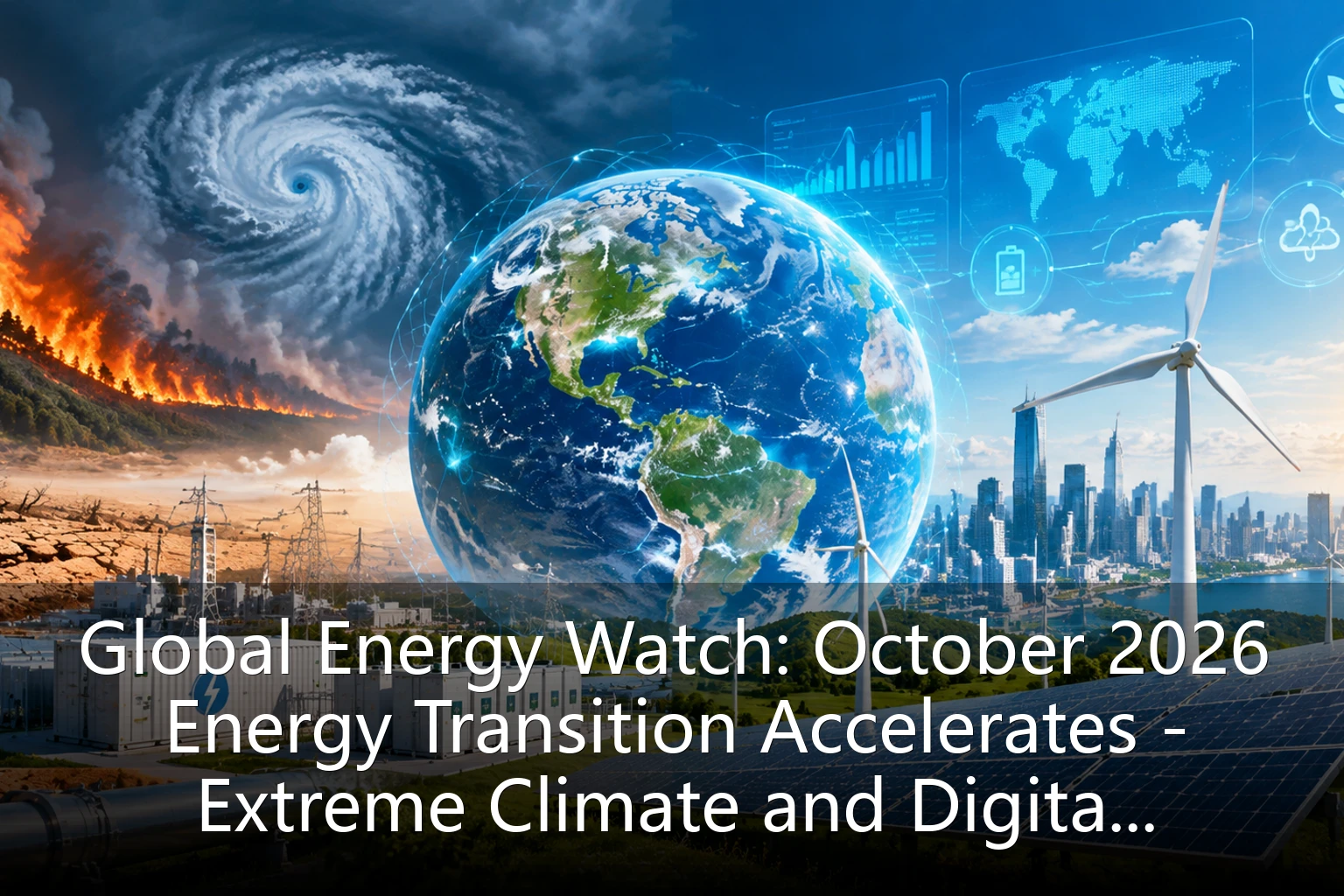
Global Energy Watch: October 2026 Energy Transition Accelerates - Extreme Climate and Digital Technology Reshaping Global Energy Consumption New Pattern
\nIn 2026, the global energy consumption landscape is experiencing unprecedented changes, with frequent extreme climate events and breakthroughs in digital technology driving the acceleration of global energy transition. According to the latest global energy consumption data analysis, global primary energy consumption growth slowed to 1.2% in the first three quarters of this year, while renewable energy installed capacity increased by 18% year-on-year, showing a clear trend of energy structure optimization. This article will deeply analyze current energy transition trends, regional development differences, and investment opportunities, providing professional reference for energy industry practitioners and investors.
\n\nGlobal Energy Consumption Status: Accelerated Transition, Optimized Structure
\nData from the first three quarters of 2026 shows that global primary energy consumption reached 68 billion tons of standard coal equivalent, a year-on-year increase of 1.2%, with growth rate decreasing by 0.7 percentage points compared to the same period last year. This slowdown is mainly due to improved energy efficiency in developed economies and industrial structure optimization in emerging economies. Notably, the share of renewable energy in the global energy structure has increased to 28.3%, approaching the traditional coal share (30.1%) for the first time, marking a historic transformation in the global energy structure.
\n\nFrom a regional distribution perspective, the Asia-Pacific region remains the main engine of global energy consumption growth, contributing 62% of the global energy consumption increment. Among them, China, India, and Southeast Asian countries continue to promote the optimization of energy consumption structure, with a significant increase in the proportion of clean energy. The total energy consumption in Europe is basically stable, but the proportion of renewable energy has reached 42.3%, leading the world. The energy consumption in North America shows the characteristics of "stable total volume and optimized structure", with natural gas and renewable energy becoming the dominant energy sources.
\n\nExtreme Climate: Accelerator of Energy Transition
\nIn 2026, frequent extreme climate events have become an important catalyst for promoting global energy transition. According to the latest report from the World Meteorological Organization, the global average temperature this year is 1.3°C higher than the pre-industrial level, setting a new historical high. The northern hemisphere experienced continuous high temperatures in summer, with many countries in Europe breaking temperature records, and many countries in Asia suffering from severe floods and other disasters. These extreme climate events have had a profound impact on the global energy system.
\n\nOn one hand, extreme climate has impacted traditional energy supply. Summer high temperatures have caused a surge in electricity demand in many parts of the world, with some areas experiencing power shortages, and the peak shaving capacity of traditional coal and gas power facing challenges. On the other hand, extreme climate has also accelerated the development of renewable energy. Wind energy, solar energy and other renewable energy have shown stronger adaptability and reliability under extreme weather conditions, becoming an important choice for ensuring energy supply.
\n\nTake China as an example, during the extreme high temperatures in the summer of 2026, the national electricity load repeatedly hit new highs, but thanks to the construction of large-scale renewable energy installations and energy storage facilities, the power system maintained stable operation. Data shows that renewable energy generation accounted for 35% of the total this summer, an increase of 5 percentage points compared to the same period last year, effectively alleviating the pressure on power supply.
\n\nDigital Technology: The Smart Engine of Energy Transition
\nThe breakthrough application of digital technology is reshaping the global energy consumption model. Artificial intelligence, big data, Internet of Things and other technologies are deeply integrated with the energy system, promoting the digital transformation of the entire chain of energy production, transmission, and consumption. In the first three quarters of 2026, global energy digital transformation investment reached $320 billion, a year-on-year increase of 25%, becoming the most dynamic investment direction in the energy field.
\n\nSignificant progress has been made in smart grid construction. The global smart grid coverage has increased to 68%, an 8 percentage point increase from 2025. Through advanced monitoring, control, and optimization technologies, smart grids have effectively improved energy transmission efficiency and reliability, providing technical support for large-scale renewable energy integration. Especially in Europe and North America, smart grids have become the basic infrastructure of the energy system.
\n\nVirtual power plant technology has experienced explosive growth. In 2026, the global virtual power plant installed capacity reached 85GW, a 120% increase from 2025. Virtual power plants integrate distributed energy resources through digital platforms, achieving optimal scheduling and flexible trading of energy, becoming an important technical path for energy transition. Australia, Germany, and the United States are in a leading position in virtual power plant applications.
\n\nThe construction of the energy internet is accelerating. Blockchain, 5G and other technologies are deeply integrated with the energy system, building new energy trading and sharing platforms. In 2026, the global energy internet market size reached $125 billion, a year-on-year increase of 40%. The energy internet not only improves energy trading efficiency but also spawns new energy business models, providing more choices for energy consumers.
\n\nRegional Energy Transition Progress: Differentiated Development Pattern
\nGlobal energy transition shows obvious regional differentiation characteristics. Different regions are exploring different transition paths according to their own resource endowments and development stages.
\n\n- \n
- Europe: As a pioneer in global energy transition, Europe has made significant progress in renewable energy and carbon neutrality. In the first three quarters of 2026, the proportion of renewable energy generation in the EU has reached 42.3%, an increase of 3.2 percentage points compared to 2025. The installed capacity of offshore wind power in Germany, Denmark and other countries continues to grow, becoming an important pillar of European energy transition. \n
- Asia-Pacific: The energy transition in the Asia-Pacific region shows the characteristics of "total growth and structural optimization". Economies such as China, Japan, and South Korea are increasing investment in clean energy, and the installed capacity of renewable energy is growing rapidly. Southeast Asian countries, with their rich solar and biomass energy resources, are becoming a hot spot for global renewable energy investment. \n
- North America: The United States and Canada focus on the coordinated development of traditional energy and renewable energy in energy transition. The shale gas revolution has provided a buffer period for North American energy transition, while large-scale investment in wind, solar, and energy storage technologies is promoting the diversification of energy structure. In the first three quarters of 2026, the renewable energy installed capacity in North America increased by 15% year-on-year, higher than the global average growth rate. \n
- Emerging Markets: Emerging economies such as India and Brazil are accelerating the energy transition process. India, with its rich solar energy resources and policy support, is rapidly increasing its renewable energy installed capacity. Brazil, with its advantages in hydropower and bioenergy, is continuously optimizing its energy structure and becoming a leader in energy transition in Latin America. \n
Energy Transition Investment Opportunities: Mining Energy Bonus Period
\nEnergy transition has created huge investment opportunities, and the global energy investment structure is undergoing profound changes. In the first three quarters of 2026, global energy transition investment reached $1.8 trillion, a year-on-year increase of 28%, accounting for 65% of global total energy investment. Renewable energy, energy storage, smart grids, hydrogen energy and other fields have become investment hotspots.
\n\nInvestment in the renewable energy sector continues to grow. In the first three quarters of 2026, global renewable energy investment reached $980 billion, a year-on-year increase of 22%. Among them, solar photovoltaic investment accounts for the highest proportion, reaching $420 billion; wind power investment is $350 billion, with offshore wind power growing particularly rapidly; investment in biomass energy and geothermal energy also shows a rapid growth trend.
\n\nEnergy storage technology is experiencing explosive growth. As the proportion of renewable energy increases, energy storage systems have become key to ensuring stable energy supply. In the first three quarters of 2026, global energy storage investment reached $210 billion, a year-on-year increase of 45%. Lithium-ion batteries remain the mainstream technology, but long-duration energy storage technologies such as flow batteries and compressed air energy storage are accelerating.
\n\nHydrogen industry chain investment is accelerating layout. As an important part of the future energy system, the hydrogen industry is attracting a large amount of investment. In the first three quarters of 2026, global hydrogen-related investment reached $85 billion, a year-on-year increase of 60%. Green hydrogen production, hydrogen storage and transportation, and hydrogen energy applications have all received capital favor. Europe, the Middle East, and the Asia-Pacific region have become hot spots for hydrogen energy investment.
\n\nFuture Outlook: Energy Transition Entering Deep Water Area
\nLooking ahead, the global energy transition will enter a deep water area, facing more challenges and opportunities. On one hand, the speed of energy transition may further accelerate, and the proportion of renewable energy will continue to increase, possibly reaching more than 40% by 2030. On the other hand, energy transition will face multiple challenges in technology, policy, and market, requiring stronger cooperation among governments, enterprises, and international organizations.
\n\nTechnological innovation will continue to promote energy transition. Breakthroughs in new photovoltaic cells, efficient wind power generation technologies, advanced energy storage technologies, hydrogen energy technologies, etc. will significantly reduce the cost of clean energy and improve the efficiency of the energy system. Digital technology will play a greater role in energy system optimization, energy trading, and energy services.
\n\nThe policy support system will be more complete. Governments will continue to improve the policy framework for energy transition, including carbon pricing mechanisms, renewable energy subsidies, energy efficiency standards, etc., to provide institutional guarantees for energy transition. International climate cooperation will also be further strengthened to promote the global energy transition process.
\n\nMarket mechanism innovation will accelerate. As the degree of energy marketization increases, new electricity markets, carbon markets, green certificate trading and other market mechanisms will continue to improve, providing market-based solutions for energy transition. Energy financial innovation will also provide more financial support for energy transition.
\n\nIn conclusion, in 2026, the global energy consumption landscape is undergoing profound changes, with extreme climate and digital technology driving the acceleration of the global energy transition process. Energy practitioners and investors should seize this historic opportunity, actively participate in the energy transition, and share the development dividends of the energy bonus period. Against the background of global energy transition, only by following trends, innovating and changing, can we occupy a favorable position in the future energy market.
