


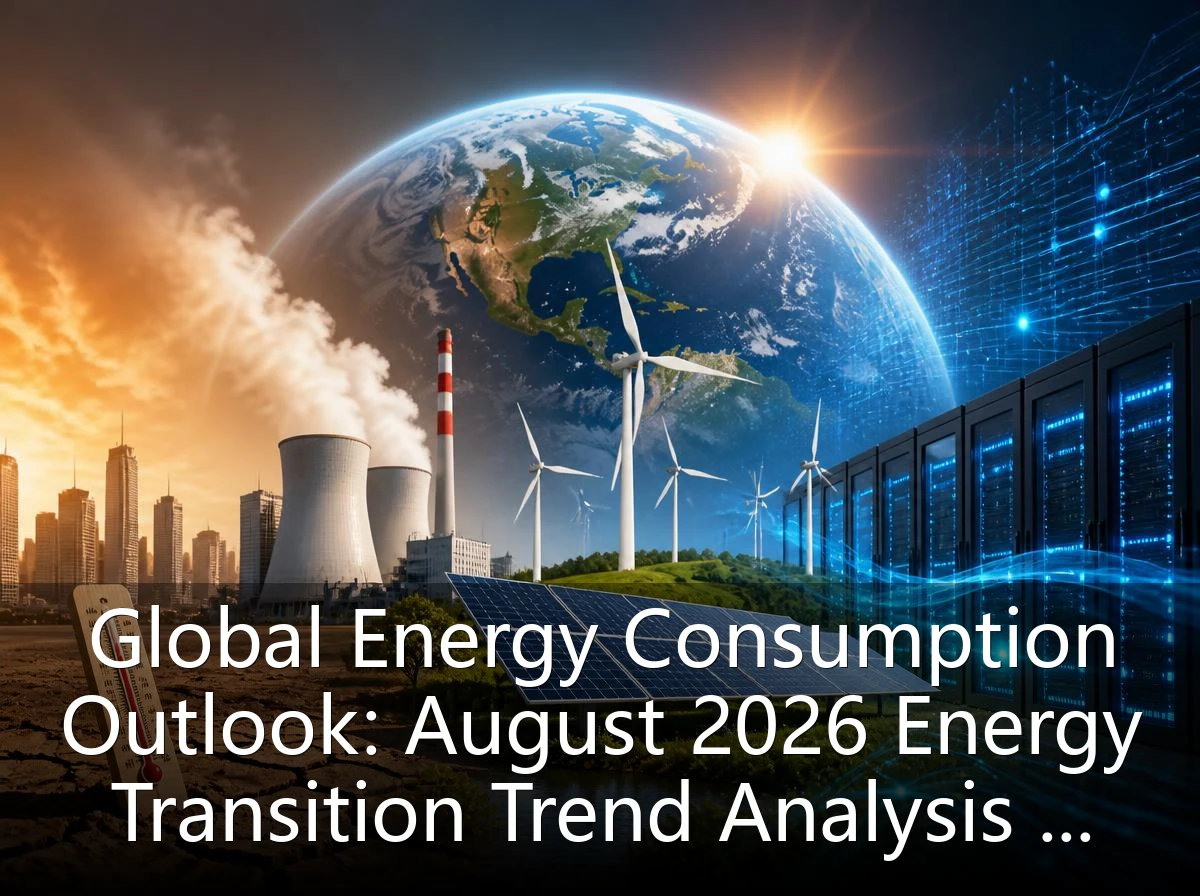
Global Energy Consumption Outlook: August 2026 Energy Transition Trend Analysis
August 2026, the global energy consumption pattern is undergoing unprecedented profound changes. The dual drivers of extreme weather events and artificial intelligence technology are reshaping the global energy consumption model, pushing the energy transition into an accelerated phase. According to the latest energy data, global primary energy consumption growth slowed to 1.5% in the first half of 2026, but the share of renewable energy surged to 35%, marking significant progress in global energy structure optimization. This article will deeply analyze current global energy consumption trends, explore how extreme heat and AI computing power become dual engines of energy consumption, and the profound impact of these changes on energy investment and industry development.
1. Extreme Weather: The Unexpected Driver of Energy Consumption
In the summer of 2026, many parts of the world experienced historic high temperatures, from North America to Europe, from Asia to Africa. Extreme heat not only affects human life but also puts unprecedented pressure on the global energy system. According to the latest report from the International Energy Agency (IEA), global electricity demand reached a historic high in July 2026, with extreme heat contributing to about 15% of the growth. This abnormal weather phenomenon is becoming an important driver of energy consumption, forcing countries to re-examine the resilience and adaptability of their energy systems.
1.1 Air Conditioning Demand Surges, Power Load Hits New High
Extreme heat directly leads to a surge in air conditioning usage, becoming the main driver of electricity demand growth. In North America, air conditioning electricity consumption in July 2026 increased by 18% year-on-year, reaching a historic high. Although Europe traditionally has a lower air conditioning penetration rate, air conditioning electricity consumption also increased by 12% this summer, showing that extreme weather is changing Europe's energy consumption habits. In Asia, especially China and India, the growth in air conditioning electricity consumption is more significant, reaching 22% and 25% respectively.
This surge in demand puts enormous pressure on the power system, with power shortages occurring in many regions. The state of Texas in the US experienced continuous power tightness in mid-July and had to activate emergency measures. Multiple European countries also faced power supply shortages, with France, Germany, and other countries restarting some coal-fired power plants to ensure power supply. This situation highlights the vulnerability of the energy system in the face of extreme weather and accelerates investments in renewable energy and energy storage technologies.
1.2 Challenges and Opportunities for Energy Infrastructure
Extreme weather not only affects energy consumption but also directly impacts energy infrastructure. In the summer of 2026, the central United States suffered severe drought, leading to a 15% decrease in hydropower generation, forcing the power system to switch to other energy sources. Floods and storms in Europe also affected transmission lines and power generation facilities, causing local power outages. These events exposed the vulnerability of traditional energy infrastructure while also providing opportunities for the development of renewable energy and smart grids.
In the face of extreme weather challenges, countries are accelerating the upgrading and transformation of energy infrastructure. The US is investing in building more durable transmission lines and distributed energy systems, while Europe is increasing investments in renewable energy and energy storage technologies. China is also promoting the construction of a "new-type power system" to enhance the resilience and flexibility of the energy system. These investments not only enhance the risk resistance capacity of the energy system but also provide new momentum for energy transition.
2. AI Computing Power: The New Engine of Energy Consumption
Meanwhile, the rapid development of artificial intelligence technology is becoming a new engine of energy consumption. With the popularization of AI applications, data centers and computing power demand are growing explosively, putting new pressure on the energy system. According to industry analysis, global data center energy consumption is expected to reach 5% of global electricity consumption in 2026, becoming the third-largest energy consumption sector after industry and transportation.
2.1 Surge in Data Center Energy Consumption
The rapid development of AI technology has driven a boom in data center construction. From large cloud service providers to AI startups, they are all building data centers on a large scale to meet computing power demand. In the first half of 2026, global data center construction investment increased by 30% year-on-year, with AI-related data center investment growth reaching 45%. This investment boom directly leads to a surge in data center energy consumption.
The high energy consumption of data centers mainly comes from two aspects: the power consumption of servers and cooling systems, and redundant systems designed to ensure data security. It is estimated that a large data center consumes as much electricity annually as a small city. With the popularization of AI applications, this energy consumption pressure will further increase.
2.2 Green Computing Power Becomes Industry Focus
In the face of the high energy consumption challenges of data centers, the industry is actively exploring green computing solutions. On one hand, data center operators are adopting more energy-efficient servers and cooling technologies to improve energy utilization efficiency. On the other hand, renewable energy has become an important energy source for data centers. Many large data centers are starting to use renewable energy such as solar and wind power, and some are even building their own renewable energy generation facilities.
Additionally, AI technology itself is being used to optimize energy consumption. Through intelligent algorithms, data centers can adjust server operating status in real time, optimize cooling systems, and reduce energy consumption. This "AI optimizing AI" model is becoming a new trend in the industry, which is expected to significantly reduce the energy consumption of data centers.
3. Renewable Energy: The Core Driver of Energy Transition
Under the dual pressure of extreme weather and AI computing power, the development of renewable energy is particularly important. In the first half of 2026, global renewable energy investment exceeded $1 trillion, reaching a historic high. The continuous growth of renewable energy installed capacity has become the core driver of energy transition.
3.1 Renewable Energy Installed Capacity Breaks New Milestones
According to the latest data, global renewable energy installed capacity exceeded 1.5 billion kilowatts in the first half of 2026, with solar photovoltaic installed capacity exceeding 2TW and wind power installed capacity exceeding 1TW. The share of renewable energy in the global power structure continues to rise, reaching 35%, an increase of 3 percentage points from the same period in 2025. This growth is mainly due to technological progress, cost reduction, and policy support.
Solar photovoltaic is the fastest-growing renewable energy technology. In the first half of 2026, global solar photovoltaic installed capacity increased by 25% year-on-year, mainly driven by strong demand from China, India, and the United States. Wind power installed capacity also maintained stable growth, especially with the acceleration of offshore wind projects. In addition, the rapid development of energy storage technology provides important support for the absorption of renewable energy, with long-duration energy storage technology becoming a focus of the industry.
3.2 Regional Differences and Emerging Markets
The development of renewable energy shows obvious regional differences. The Asia-Pacific region continues to lead, with renewable energy installed capacity accounting for 45% of the global total in the first half of 2026. China, India, and Japan are the main growth engines in the Asia-Pacific region. Although the growth rate in Europe has slowed down, the share of renewable energy has reached 40%, leading the world. The growth of renewable energy installed capacity in North America is stable, mainly benefiting from policy support in the United States and Canada.
Emerging market countries are becoming an important force in the development of renewable energy. Renewable energy installed capacity in Africa, Latin America, and the Middle East is growing rapidly, especially solar photovoltaic projects. The development of renewable energy in these regions not only helps solve energy shortages but also provides new momentum for global energy transition.
4. Energy Structure Optimization: The Barometer of Old and New Energy Alternation
Under the dual influence of extreme weather and AI computing power, the global energy structure is accelerating optimization. The alternation trend between traditional energy and new energy is more obvious, and the barometer of old and new energy is undergoing profound changes.
4.1 Accelerated Coal Phase-Out
Coal, as a representative of traditional energy, is accelerating its exit from the stage of history. In the second quarter of 2026, global coal demand decreased by 4.2%, with China contributing the main reduction. As the world's largest coal consumer, China is vigorously promoting clean coal utilization and substitution, and the share of coal in primary energy consumption continues to decline. Coal consumption in Europe has also decreased significantly, with many countries announcing the gradual phase-out of coal power generation.
The main reasons for the accelerated coal phase-out are the improved cost competitiveness of renewable energy and policy support. As the costs of solar and wind power continue to decline, the economic viability of coal power generation is being lost. In addition, climate change pressure and environmental requirements are also driving the exit of coal. However, the coal phase-out also brings some challenges, especially in developing countries, where it is necessary to balance energy security and transition costs.
4.2 The New Role of Natural Gas
Natural gas, as a transitional energy, plays an important role in energy transition. In July 2026, global natural gas prices soared by more than 40% in a single month, showing the volatility of the natural gas market. The role of natural gas in the power system is changing, shifting from a baseload power source to a peaking power source.
In power systems with a high share of renewable energy, natural gas power plants mainly undertake peaking tasks to cope with the intermittency of renewable energy. This role change puts new requirements on natural gas power generation technology, requiring higher flexibility and response speed. At the same time, natural gas also faces competition pressure from renewable energy and energy storage technologies, and its long-term development prospects are uncertain.
5. Investment Opportunities: The Roadmap for Energy Gold Mining
Changes in the global energy consumption pattern provide new opportunities for investors. In the context of energy transition, the following areas are worth attention:
5.1 Explosive Growth in the Energy Storage Industry
Energy storage technology is the key to solving the intermittency of renewable energy and a current investment hotspot. In the first half of 2026, global energy storage installed capacity exceeded 200GW, with long-duration energy storage technology becoming a focus of the industry. The development of the energy storage industry not only solves the absorption problem of renewable energy but also provides new growth points for investors.
Among energy storage technologies, battery energy storage is the fastest-growing field, especially lithium-ion battery technology. In addition, traditional energy storage technologies such as pumped hydro storage and compressed air energy storage are also constantly innovating. Hydrogen energy storage, as an emerging technology, is gaining more and more attention, especially in the field of long-duration energy storage.
5.2 Smart Grid Construction
Smart grids are an important part of the energy system and an important investment direction. With the increase of renewable energy and distributed energy, traditional grids are difficult to adapt to the new energy pattern, making smart grid construction an inevitable choice. Smart grids can improve the flexibility and reliability of the energy system and promote efficient energy utilization.
Smart grid construction includes multiple aspects, such as smart meters, distributed energy management systems, demand response technologies, etc. The application of these technologies can improve the intelligence level of the grid, optimize energy distribution, and reduce energy loss. Smart grid construction not only provides opportunities for investors but also provides technical support for the transformation of the energy system.
5.3 Green Finance and Carbon Markets
Green finance and carbon markets are important tools to promote energy transition. In 2026, the global carbon market transaction volume topped 480 billion euros, showing the effectiveness of carbon pricing mechanisms. Green financial products, such as green bonds and sustainability-linked bonds, provide financing channels for renewable energy projects.
The activity of carbon markets provides new investment opportunities for investors and also promotes the low-carbon transformation of enterprises. With the improvement of carbon pricing mechanisms, the costs of high-carbon emission enterprises will increase, while low-carbon enterprises will gain a competitive advantage. This change will guide capital to flow into green industries and promote energy transition.
6. Future Outlook: Challenges and Opportunities of Energy Transition
Looking ahead, the global energy transition still faces many challenges but also contains huge opportunities. Extreme weather and AI computing power will continue to affect the energy consumption pattern, and renewable energy and energy storage technology will become the core of the energy system. In this process, investors need to pay attention to the following trends:
6.1 The Importance of Technological Innovation
Technological innovation is the key driver of energy transition. Whether it is renewable energy technology, energy storage technology, or smart grid technology, continuous innovation is needed to improve efficiency and reduce costs. Investors should focus on companies with technological advantages and innovation capabilities, as these companies will occupy a favorable position in the energy transition.
6.2 The Role of Policy Support
Policy support is an important guarantee for energy transition. Governments around the world are introducing various policies to support renewable energy and energy transition, such as subsidy policies, carbon pricing mechanisms, and renewable energy quotas. Investors should closely follow policy changes and seize investment opportunities brought by policies.
6.3 The Trend of Market Integration
The energy market is undergoing an integration process, with large energy companies and technology companies expanding their market share through mergers and acquisitions and cooperation. This integration will increase industry concentration and may also bring new investment opportunities. Investors should focus on companies with integration capabilities and market leadership.
Conclusion
The global energy consumption data in August 2026 reveals profound changes in energy transition. Extreme weather and AI computing power have become dual engines of energy consumption, pushing the energy system towards a cleaner, more efficient, and smarter direction. The rapid development of renewable energy, breakthroughs in energy storage technology, and the construction of smart grids provide important support for energy transition. In this process, investors need to pay attention to trends such as technological innovation, policy support, and market integration, and seize the investment opportunities brought by energy transition. Although the energy transition faces many challenges, in the long run, the development trend of clean energy is irreversible, and the energy dividend period has arrived, providing broad development space for investors.
