


Axial Flux Motor: China's 'Small Disc' Drives Global Green Power Transformation
Abstract
As a core device that converts electrical energy into mechanical energy, the technological advancement of motors directly influences the development of new energy vehicles, industrial automation, and other fields. This article takes China's first mass production of axial flux motors as a starting point, systematically analyzing the technical principles, production processes, market applications, and industrial impacts of this new motor type. Research shows that with its 'small disc' structure, the axial flux motor achieves a breakthrough in being smaller, lighter, and more powerful, reshaping the competitive landscape of the new energy power track.
Keywords: Axial flux motor; New energy power; Mass production; Green energy transition; Industrial ecosystem
1. Introduction: Beyond the 'Small and Light' Power Revolution
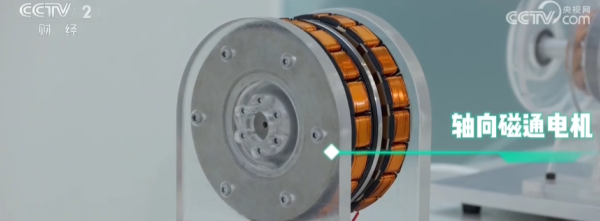
In today's rapidly evolving new energy technologies, the motor, as a core device that efficiently converts electrical energy into mechanical energy, is becoming a key engine driving industrial upgrades across multiple sectors. In 2026, a technological breakthrough from China attracted global attention—the first mass production of axial flux motors. This innovative product, shaped like a 'small disc,' injects powerful momentum into emerging fields such as new energy vehicles, electric ships, and even low-altitude aircraft with its disruptive performance indicators.

When we delve into this motor production base in Jinhua, Zhejiang Province, what meets the eye is not only a busy production line but also a strategic breakthrough by Chinese manufacturing in the high-end power device field. The differentiated design between the traditional cylindrical radial flux motor and the disc-shaped axial flux motor is fundamentally changing people's conventional understanding that 'motor volume and weight are directly proportional.'
2. Technological Leap: The Performance Revolution of Axial Flux
2.1 From Structural Innovation to Performance Leap
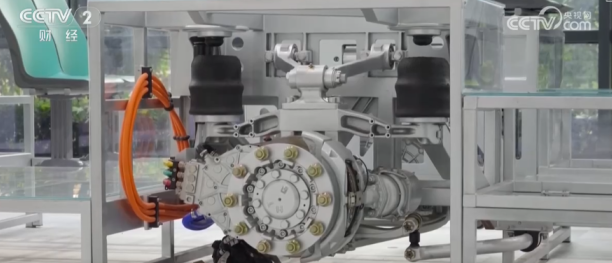
In traditional designs, the magnetic field of a radial flux motor is perpendicular to the output shaft, and the motor is cylindrical. In contrast, the magnetic field of an axial flux motor is parallel to the output shaft, using a flat disc-shaped structure. This seemingly minor structural change brings a stunning performance transformation: under the same power output, the weight and volume of an axial flux motor are each reduced by half.
This means: an electric car with a range of 500 km, if equipped with an axial flux motor, can free up space to increase battery capacity or optimize interior layout; an electric ship using such a motor can significantly reduce cabin space and improve speed and range. This 'small disc' carries enormous energy density and power density, backed by collaborative innovations in magnetic circuit design, materials science, thermal management, and more.
2.2 Core Performance Parameters
| Parameter Dimension | Traditional Radial Flux Motor | Axial Flux Motor | Improvement |
|---|---|---|---|
| Power Density | Baseline | Increased 80-120% | Significant Enhancement |
| Volume Occupancy | Baseline | Reduced 50% | Space Optimization |
| Weight | Baseline | Reduced 45-55% | Lightweight Breakthrough |
| Energy Efficiency | 92-95% | 95-98% | Better Energy Utilization |
3. Production Breakthrough: Practice of the World's First Mass Production Line
3.1 From Lab to Production Line
A breakthrough at the technical level is only the first step; the real challenge is transforming the 'delicate device' from the lab into a 'scalable product' for industry. Recently, the world's first mass production line for axial flux motors officially began operations in Jinhua City, Zhejiang Province. According to the company's plan, 5 such production lines have been built, with an annual capacity of 300,000 units.
The manufacturing process of this 'small disc' is not a simple replication: the production line includes 152 precision processes, achieving comprehensive automation and intelligent control, with a yield rate consistently above 98%. The company head noted: 'The line can flexibly manufacture multiple product types simultaneously, covering a product technology range from 60kW to 1200kW, meeting the differentiated needs of various application scenarios.'

3.2 Automation and Intelligence in Parallel
Walking into this modern workshop, it is evident that, unlike traditional motor manufacturing which heavily relies on manual assembly, axial flux motor production has achieved multi-level automation: from automatic magnet assembly to magnetic circuit accuracy testing, from high-voltage insulation testing to thermal balance verification, each step is coordinated by precision equipment and intelligent algorithms.
Nearly a hundred finished motors temporarily stored in the workshop are mainly used for new energy mining trucks and heavy trucks. These motors will be shipped to Anhui, Hunan, and other places today to serve special operating scenarios such as mining areas and ports—this is both a practical test of product performance and a successful transition from 'exhibit' to 'product' for axial flux motors.
4. Market Expansion: From 'Waiting in Line' to Global Layout
4.1 Explosive Demand from Downstream Industries
'There is explosive demand for this technology across all industries, and the delivery pressure in the second half of the year is very high.' This statement from the company head is not marketing talk but a true reflection of the current market. Data shows that axial flux motors have covered 9 core industrial tracks, with over 100 specific application scenarios.
New energy passenger cars, electric ships, electric motorcycles, low-altitude aircraft, and even humanoid robots are all 'waiting in line' for supply. This is a wave of upgrade across the entire industrial chain: for new energy vehicle companies, halving weight means longer range; for electric ship companies, space release means higher cargo capacity; for the low-altitude economy, lightweight directly relates to flight safety and range.
4.2 Exponential Growth in Global Markets
Remarkably, this Chinese company's market reach has extended to over 30 countries and regions. From traditional European and American markets to emerging Southeast Asian and South American markets, axial flux motors are becoming a new 'Made in China' business card.
Since 2026, the company's exports of motors to Turkey and Thailand have achieved year-on-year growth of 520% and 150%, respectively. The surge in demand from European automakers for axial flux motors reflects the accelerated global electrification transformation driving competition in high-end power systems. This not only means that Chinese companies have mastered core technical discourse but also heralds a profound restructuring of the global new energy industry chain.
5. Industrial Impact: How Axial Flux Motors Reshape the Power Ecosystem
5.1 Ripple Effects on New Energy Downstream Industries
'A small disc drives a big market' is no empty slogan. Axial flux motors are activating the development vitality of downstream industries, driving the formation of new economic growth engines. Taking new energy passenger cars as an example, equipping smaller, lighter, and more powerful motors not only reduces vehicle curb weight but also optimizes front-rear axle weight distribution and improves handling stability; for electric ships, the compression of motor volume frees up valuable space for battery compartments and cargo holds, significantly increasing overall economy.
5.2 Accelerated Deployment in Emerging Applications
The low-altitude economy is one of the most anticipated application areas for axial flux motors. 'Air mobility tools' such as flying cars and industrial-grade drones have stringent requirements for power-to-weight ratio. The emergence of axial flux motors is like 'timely rain': it not only meets lightweight requirements but also maintains stable output under high-speed, high-load conditions, providing the core technical foundation for the large-scale commercialization of the low-altitude economy.
Equally noteworthy is the exploration in the humanoid robot field. Attitude control, walking balance, fine hand operations—these complex electromechanical systems all require high-power-density drive units. The flattening and modular characteristics of axial flux motors offer new possibilities for integrating higher-performance drive systems within the limited space of robots.
6. Future Outlook: Mass Production and Continuous Innovation in Parallel
6.1 Capacity Ramp-Up and Delivery Assurance
According to the company's plan, the total number of axial flux motors delivered to the market before 2026 will approach 60,000 units; in 2026 alone, the expected delivery volume will exceed 60,000 units, showing explosive growth. This means the company will enter a period of large-scale delivery, where production organization flexibility, supply chain security and stability, and quality control precision will all be tested by the market.
6.2 Technology Iteration and Competitive Barriers
In the long term, the axial flux motor technology route still has huge room for evolution: development of higher energy density magnetic materials, more optimized topology design, smarter thermal management solutions—these are all areas the company is investing in. The Chinese company that first achieved mass production has not only won a time window but also accumulated hard-to-replicate know-how in the production process—this forms a core barrier to future competition.
At the same time, it should be noted that as major global OEMs and motor giants accelerate their layout in axial flux technology, market competition will become increasingly fierce. Maintaining technological leadership and deepening collaborative innovation across the industrial chain will be key to China's ability to sustain its advantage in this emerging track.
7. Conclusion
'A small disc drives a big market'—with its revolutionary technical features of being smaller, lighter, and more powerful, the axial flux motor is becoming a key component in the global new energy power track. From concept validation in the lab, to the rise of the world's first mass production line in Jinhua factory, to market coverage across more than 30 countries, this reflects not only the successful commercialization of a technological breakthrough but also the vivid practice of China's manufacturing system leaping from 'catching up and imitating' to 'leading innovation.'
In the future, driven by the 'dual carbon' goals and the resonance of global electrification transformation, axial flux motors are expected to deeply empower trillion-level tracks such as new energy passenger cars, electric ships, and the low-altitude economy. What the 'small disc' carries is not only performance improvement and space liberation but also a strategic vision for a country's manufacturing industry to seize the initiative and reshape the landscape in the new round of industrial revolution.
When more 'waiting in line' orders turn into roaring power systems, a new era of new energy power centered on axial flux motors is accelerating toward us.
Reference Sources:
[1] CCTV Report – Axial flux motor achieves mass production for the first time in China
[2] Company field research data (July 2026)
