


3,750-Tonne Green Ammonia Export: Three Historic Breakthroughs for China's New Energy Industry
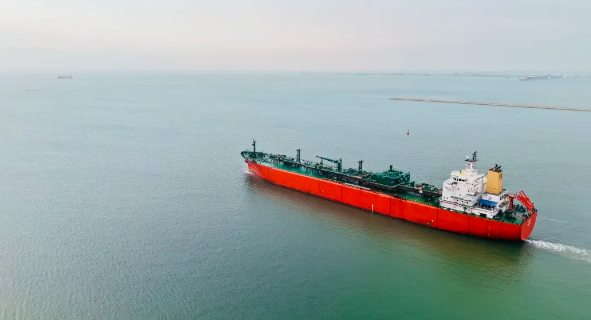
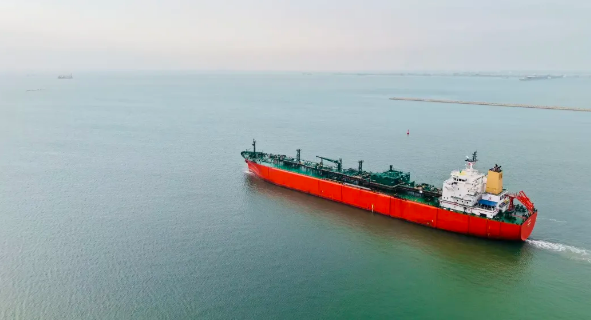
In late autumn 2023, a cargo ship loaded with 3,750 tonnes of green ammonia departed from Lianyungang, Jiangsu, bound for South Korea. This seemingly ordinary foreign trade shipment actually set the global record for the largest single batch of green ammonia exports. On the map of China's new energy industry, this is a milestone leap—it is not just "selling a batch of green ammonia," but marks the first time China's inland wind and solar resources have entered the global high-end energy trade system in a complete, compliant, and high-value manner.
Breakthrough 1: Ending the Inland Dilemma of "Visible but Untransportable Wind and Solar Resources"
Western Jilin Province boasts abundant wind and solar resources, ranking among the top nationwide. However, inland new energy has long faced a critical shortfall: wind and solar power are intermittent, difficult to store, and limited in transmission. High-quality green electricity could only be "consumed locally depending on the weather," with vast amounts of valuable wind and solar energy unable to be converted into tradable, transportable, and exportable commodities. This is precisely the industry pain point that must be addressed for China's new energy industry to achieve leapfrog development.
In the past, the new energy industry competed on installed capacity and scale; today, the focus has shifted to conversion efficiency, carrier innovation, and export capability. The core value of the Da'an Green Ammonia Project is precisely to respond to this historic shift—through the technical route of "green electricity to green hydrogen to green ammonia," it solidifies fleeting wind and sunlight into storable, transportable, and globally tradable green fuel.
It is worth emphasizing that the project achieved stable operation under extreme cold conditions of -30°C, with zero accidents throughout the year and 300 consecutive days of stable production. This achievement is no accident; it relies on proprietary technology to resolve the fundamental contradiction between the volatility of wind and solar resources and the continuous production requirements of chemical processes. This is not a simple demonstration project, but a national-level validation of large-scale green ammonia industrialization in cold regions. Inland resources are no longer trapped inland.
Breakthrough 2: From "Selling Raw Materials" to "Selling Carbon Value"—China's Green Energy Gains International Pricing Power
The most critical hardcore breakthrough of this export, and the most easily overlooked, lies in the international recognition of green value. Previously, many domestic green ammonia exports could only be priced as ordinary chemical raw materials—green production capacity existed without green certification; emission reduction advantages existed without international value. In short: the work was done, carbon was reduced, but the value was not realized.
This time, the Da'an green ammonia completely changed the situation. It obtained the world's first ISCC EU certification for non-biological renewable fuel ammonia, with the entire chain complying with the strictest EU standards. From power generation, hydrogen production, synthesis, storage and transportation to export, the entire lifecycle carbon footprint is traceable, verifiable, and internationally accepted. This means that Chinese green ammonia is no longer considered a low-end chemical product, but is formally recognized by the global market as a renewable green fuel.
This batch of 3,750 tonnes of green ammonia can achieve emission reductions of over 10,000 tonnes of CO2, equivalent to the annual carbon sequestration of one million trees. The data is quantifiable, the value is realizable, and the standards are globally applicable. China's new energy industry has officially moved from "capacity export" to "green value export." This is not just a successful export, but a key battle for China's green energy to gain pricing power in the international market.
Breakthrough 3: Rewriting Perceptions—Northeast China Has Not Only Old Industries but Also New Track Discourse Power
The outside world's inherent impression of Northeast China's energy sector often focuses on traditional energy, heavy chemicals, and old industrial bases. However, this green ammonia export has completely reshaped the industrial narrative: in the future global low-carbon energy competition, Northeast China has a seat, and Jilin has advantages.
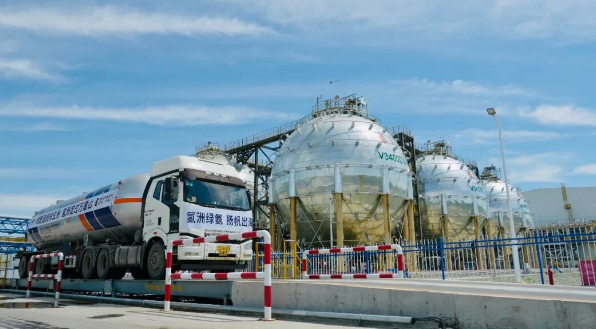
Green ammonia is recognized as the ultimate track for global shipping decarbonization and a rigid demand commodity for global energy transition. Relying on the Da'an project, Jilin has built a stable large-scale production capacity of 180,000 tonnes of green ammonia per year, achieving five industry-firsts globally and establishing a complete closed loop from "green electricity to green hydrogen to green ammonia to international market." More critically, the project collaborates with leading domestic enterprises across the entire industrial chain, building a replicable, scalable, and exportable Chinese-style green ammonia industrial system.
While others are still experimenting, we are already producing at scale; while others are still tackling technology, we are already exporting in batches; while others are still striving for certification, we have already obtained the highest global standard pass. One voyage reflects the maturity of China's new energy industry and a new logic for Northeast revitalization—relying not on resource depletion or policy subsidies, but on new quality productivity, technological independence, and international standards to forge a new growth curve.
Conclusion: From Resource Dilemma to Global Value Chain Reshaping
The voyage of 3,750 tonnes of green ammonia is far from a simple chemical export. The historical significance it carries goes far beyond the cargo itself. It is the first time China's inland wind and solar resources have integrated into the global high-end energy trade system in a complete, compliant, and high-value manner. It is a turning point for China's new energy industry from scale expansion to quality leap, and a strategic fulcrum for the Northeast old industrial base in the low-carbon competition of the new era.
Looking ahead, as global decarbonization accelerates, demand for green ammonia fuel will continue to rise. With vast wind and solar resources, a complete manufacturing system, and continuously breakthrough core technologies, China is fully capable of dominating this strategic track. The success of the Da'an project has paved a verifiable, replicable, and scalable path for future players.
This export has changed not just an export order, but China's role in global green trade rules. From today onward, China is no longer just a producer of green products, but a definer of green standards and a realizer of green value. This is the historic breakthrough most worthy of contemplation behind the 3,750-tonne green ammonia export.
