


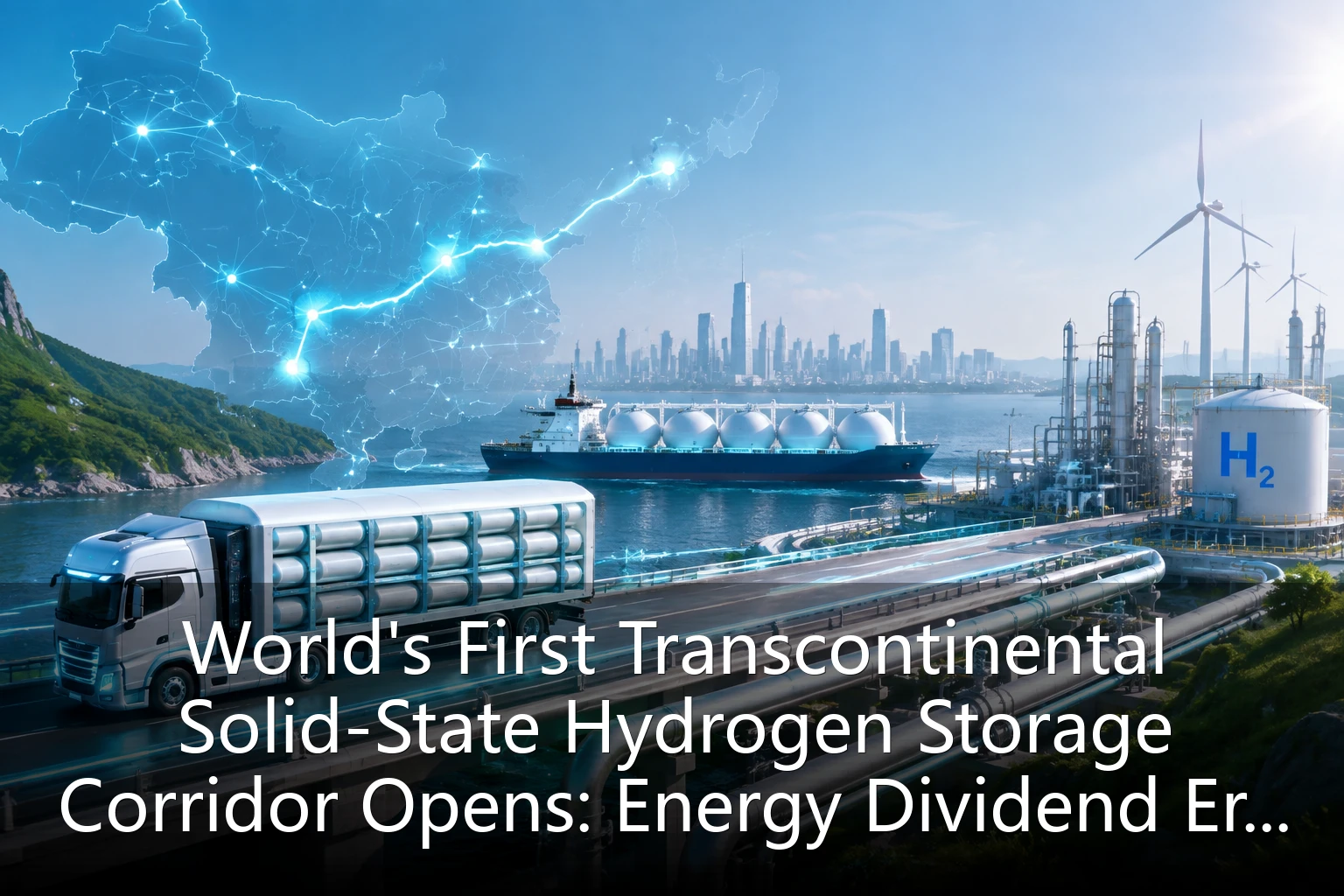
On August 3, 2026, the global energy infrastructure network witnessed a historic moment—the first transnational solid-state hydrogen transport corridor connecting Central Europe and Northern Europe was officially declared open. Spanning over 1,200 kilometers, this hydrogen corridor utilizes the latest high-density magnesium-based solid-state hydrogen storage technology, not only completely breaking the safety bottleneck of long-distance hydrogen transport but also marking the global hydrogen industry's formal shift from an island model of "local consumption" to a new stage of "cross-regional bulk trade" in the energy dividend era.
Solid-State Hydrogen Storage Breakthrough: Tackling the "Last Mile" of Hydrogen Commercialization
For a long time, the hydrogen industry has been regarded as the "ultimate energy of the 21st century," but the high cost and low safety of storage and transport have always been a sword of Damocles hanging over the industry chain. Traditional high-pressure gaseous storage requires extremely high pressure, while liquid hydrogen storage demands temperatures as low as -253°C. Both face significant energy loss and expensive equipment, severely undermining the economic viability of green hydrogen over long distances.
The core of this newly opened transcontinental solid-state hydrogen storage corridor lies in a materials breakthrough. By introducing a new lightweight magnesium-based alloy, the corridor enables efficient hydrogen absorption and release at ambient temperature and pressure.
Three Core Advantages from the Technological Breakthrough:
- Enhanced Safety: Solid-state storage completely eliminates the explosion risks associated with high-pressure container leaks and liquid hydrogen evaporation. Even under extreme impact or penetration, hydrogen will not escape violently.
- Economic Reversal: Ambient temperature and pressure transport drastically reduces manufacturing standards and maintenance costs for storage and transport equipment. Calculations show that for distances over 500 kilometers, the total cost of solid-state storage is already lower than that of liquid hydrogen and high-pressure gaseous hydrogen.
- Purity Assurance: The release process of solid-state storage inherently includes a purification function, directly outputting high-purity hydrogen up to 99.999%, perfectly matching the demands of fuel cells and high-end electronics manufacturing.
A New Engine in the Energy Dividend Era: Hydrogen Exports Reshape the Global Energy Trade Map
From the global energy consumption perspective of Gupin Energy Island, the opening of the solid-state hydrogen storage corridor is not an isolated technical event; it is an inevitable outcome as the global energy transition enters deeper waters. With global renewable energy installations breaking historical records, the intermittency of wind and solar power and the problem of curtailment are becoming increasingly prominent. Converting surplus green electricity into green hydrogen for cross-regional dispatch has become the key to breaking the geographical resource constraints of new energy.
The opening of this corridor means that "green hydrogen production hubs" with excellent solar resources, such as North Africa, the Middle East, and Australia, can safely and cost-effectively transport energy to "green hydrogen consumption centers" in Europe and East Asia. This will not only activate a trillion-dollar global green hydrogen trade market but also give rise to a "Hydrogen Silk Road" akin to existing oil shipping routes.
For domestic new energy enterprises, this sends a strong investment signal: hydrogen exports are no longer limited to equipment sales but are evolving into higher value-added "hydrogen commodity trade." Companies with R&D capabilities in solid-state storage materials, experience in transnational hydrogen logistics operations, and a layout in green hydrogen certification systems will be the first to reap the dividends of this energy dividend era.
Interpreting Industry Chain Investment Opportunities: A Full-Scale Boom from Infrastructure to End-Use Applications
With the operational launch of the solid-state hydrogen storage corridor, the valuation logic of the hydrogen industry chain will undergo a fundamental restructuring. In the past, market speculation on hydrogen largely focused on fuel cell vehicle expectations, but now, the completion of infrastructure truly closes the loop on hydrogen commercialization.
- Upstream Materials: The R&D and mass production of hydrogen storage alloy materials will become a focal point for capital competition. The construction of large-scale production lines for magnesium-based, titanium-based, and rare-earth-based storage materials will directly benefit from the surge in storage and transport demand.
- Midstream Storage and Transport Equipment: The construction of solid-state hydrogen storage containers, specialized transport ships, and transit refueling stations will enter a period of intensive investment. Relevant special equipment manufacturers are expected to see an order surge similar to the explosive growth of photovoltaic inverters in previous years.
- Downstream Application Scenarios: As the cross-regional supply of high-purity hydrogen becomes stable and affordable, the operating costs of hydrogen fuel cell heavy-duty trucks, hydrogen-based metallurgy, and hydrogen-based chemicals (such as green ammonia and green methanol synthesis) will drop significantly, accelerating the replacement of traditional fossil fuels.
Gupin Energy Island Analysis: Seizing the "Hydrogen" Opportunity in the Energy Dividend Era
Currently, the world is at a critical inflection point in the transition between old and new energy. The commercial deployment of solid-state hydrogen storage technology provides the most definitive technical support for the carbon neutrality pathway. As the energy dividend era accelerates, investors should pay close attention to the turning point where the hydrogen industry chain shifts from "concept speculation" to "performance delivery."
It is recommended to focus on leading enterprises with first-mover advantages in solid-state hydrogen storage materials and engineering companies deeply involved in the construction of transnational hydrogen trade infrastructure. In the second half of the energy dividend era, hydrogen is highly likely to replicate or even surpass the explosive trajectory of solar and wind power over the past five years, becoming an indispensable super-weight sector in new energy investment portfolios. The roadmap for energy exploration has been drawn; those who can first secure a position in the hydrogen storage and transport infrastructure network will dominate the future global energy landscape.
